Behind the Song: Dwell
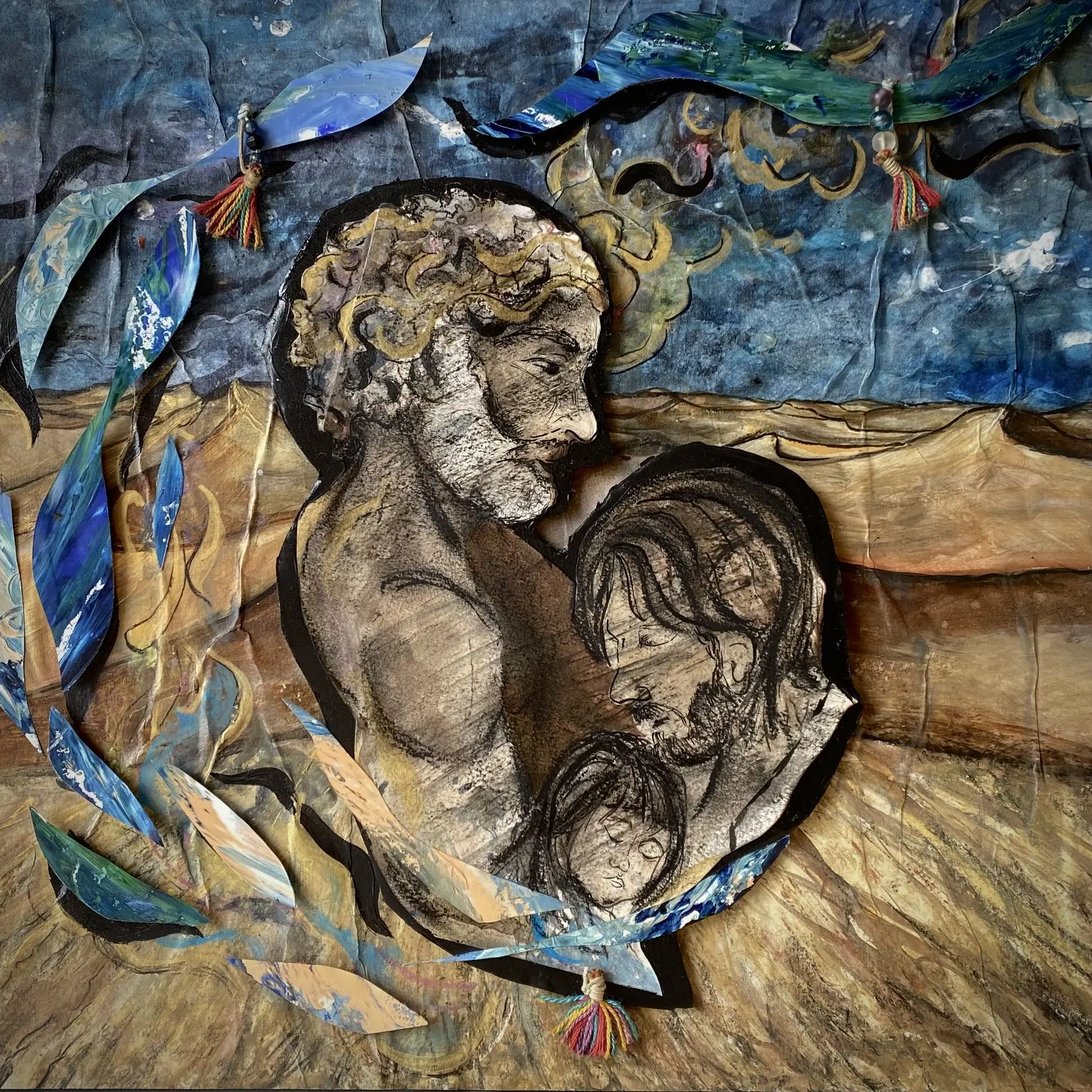
A song about God’s desire to dwell with His people—and the rest we find when we remain in Him.
Released December 31, 2025
Where did Dwell begin?
Dwell was written in 2025 during Cenobium, an annual gathering for writers and visual artists hosted by Mission Chattanooga. That year’s theme was the tabernacle.
We gathered first to study the biblical theme together, and then the following weekend we met in smaller groups to create. I knew I wanted to write a song, but before I could do that, I needed to understand more deeply what the tabernacle was actually for and what it represented.
That Saturday morning, during my usual porch reflection time, I started journaling. I kept coming back to the idea that the tabernacle was a place of abiding for God’s glory—a place where heaven and earth met, and where a holy God could dwell among His people.
What made that idea personal for you?
One thing that struck me was how incredibly specific God’s instructions were for building the tabernacle. There was so much attention to beauty, quality, skill, and detail.
That made me think about the language in Psalms that says we are fearfully and wonderfully made.
There was a parallel there for me: the place God chose to dwell was carefully constructed, and we too are carefully created. In the New Testament, we are told that our bodies are temples of the Holy Spirit.
That led me to ask what it really means to live as though God’s Spirit resides within me—not just as a theological idea, but in practical life.
How did the themes of rest and dwelling become connected?
Peace and rest have often felt elusive to me.
I had already been thinking about the idea of dwelling for several months before Cenobium, especially while spending time in the Psalms. Psalm 91 kept surfacing again and again.
The passage describes dwelling as habitation—not visiting, not occasionally turning toward God, but actually remaining there. And it is in that dwelling that we find rest.
That became especially meaningful because the tabernacle itself was built in the wilderness. It suggested to me that rest and peace are not necessarily things we experience only after hardship is over. God can make His dwelling place with us in the wilderness itself.
Was that connected to something you had experienced personally?
By the time I wrote Dwell, I wasn’t in the middle of a crisis. I had actually come out of a three-year period that felt like a spiritual desert.
I had been working a job that consumed nearly all of my time, energy, attention, and creativity. By the end of the day, I felt used up, with very little left to give.
When I transitioned into self-employment, I had to learn how to structure my life differently and give myself room to recover. During that time I began reconnecting with my faith and learning to trust God again.
So Dwell came from looking back on wilderness, but also from asking how to live differently on the other side of it.
What was the first lyric that came to you?
The earliest version began with the line: “Your heart is to dwell among us, around us, within us.”
That three-part idea survived the later edits, even as the wording and structure changed.
At the heart of the song was the idea that God deeply desired to be with us, and that He went to extraordinary lengths to make that possible.
The tabernacle is part of that story, but for me it naturally points forward to Christ—His coming, His sacrifice, His resurrection, and ultimately the indwelling of the Holy Spirit.
God made a way to dwell with us.
Was writing this song different from your usual process?
Very much so.
Most of my songs begin because I’m wrestling with something difficult. Dwell was different because I was intentionally trying to create for a specific event and theme. That was new for me.
On the creation day, I was gathered in a home with several other writers and artists. I spent a lot of time writing furiously in my journal, and I felt frustrated because I didn’t have the tools I normally rely on. I had no piano and no guitar—just my journal and my phone.
But as I watched the other artists interpreting the same theme in completely different ways, something opened up for me. I began to see the theme as an invitation rather than a limitation.
Eventually I took a walk through the neighborhood and spoke the beginnings of the lyrics into a note on my phone.
The song was still very unfinished when we shared our work that evening. The lyrics continued changing over the next couple of weeks, and the melody took several attempts before it finally settled into the version that exists now.
Which lyrics feel most personal to you?
Two phrases stand out: “The totally broken, new again” and “Receive transformation.”
Those lines feel connected to my own story because I can look back over many years and see how profoundly my life and faith have changed.
There was a major turning point for me years ago when sustained time in Scripture changed the way I understood my identity, my relationship with sin, and my relationship with Jesus.
But I still don’t think I have “arrived” when it comes to learning how to rest and dwell in God.
That understanding is still unfolding in my practical life.
I think of Dwell as another signpost along the journey—another Ebenezer.
Really, I think many of my songs are little Ebenezers. They help me remember what was hard, what happened afterward, and how God kept me even when I wanted to wander.
What do you hope someone experiences when they hear Dwell?
I hope the song gives people fresh vision for their relationship with God.
I hope something they may have heard many times before becomes new again—something deeper and more personal.
More than anything, I hope it helps create space for a personal encounter with the God of the universe, who has always desired to dwell with His people.